
Leveraging Continuous Glucose Monitoring Data to Forecast Future Nocturnal Hypoglycemia Episodes with Extended Prediction Horizon
##plugins.themes.bootstrap3.article.sidebar##
##plugins.themes.bootstrap3.article.main##
Abstract
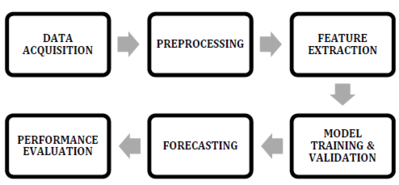
Nocturnal hypoglycemia remains a significant challenge in diabetes management due to potential complications and the lack of patient awareness during sleep. This study explores how Continuous Glucose Monitoring (CGM) devices can predict overnight hypoglycemic episodes, a crucial aspect of diabetes care. CGM devices capture high-resolution glucose dynamics over time, enabling the development of predictive models. Despite challenges, predicting nocturnal hypoglycemia is feasible, as it is influenced by insulin administration, meal timing, and circadian rhythms. The study aims to create a predictive framework using Long Short-Term Memory (LSTM) networks with an integrated attention mechanism. The LSTM component captures glucose sequence dependencies, while attention focuses on key patterns related to hypoglycemia risk. The model predicts hypoglycemia within specified time intervals and generates probabilistic forecasts based on nocturnal CGM data and sliding time windows. The system's accuracy was validated through sensitivity, specificity, and Area Under the Curve (AUC) with Receiver Operating Characteristic (ROC), demonstrating superior performance compared to other models. This highlights the relevance of deep learning, particularly LSTM-based approaches, in hypoglycemia prediction tools. The model enhances decision-support systems for diabetes management by offering timely alerts, especially for insulin-dependent patients during nocturnal periods, thus improving patient safety.
##plugins.themes.bootstrap3.article.details##

This work is licensed under a Creative Commons Attribution-NonCommercial-NoDerivatives 4.0 International License.